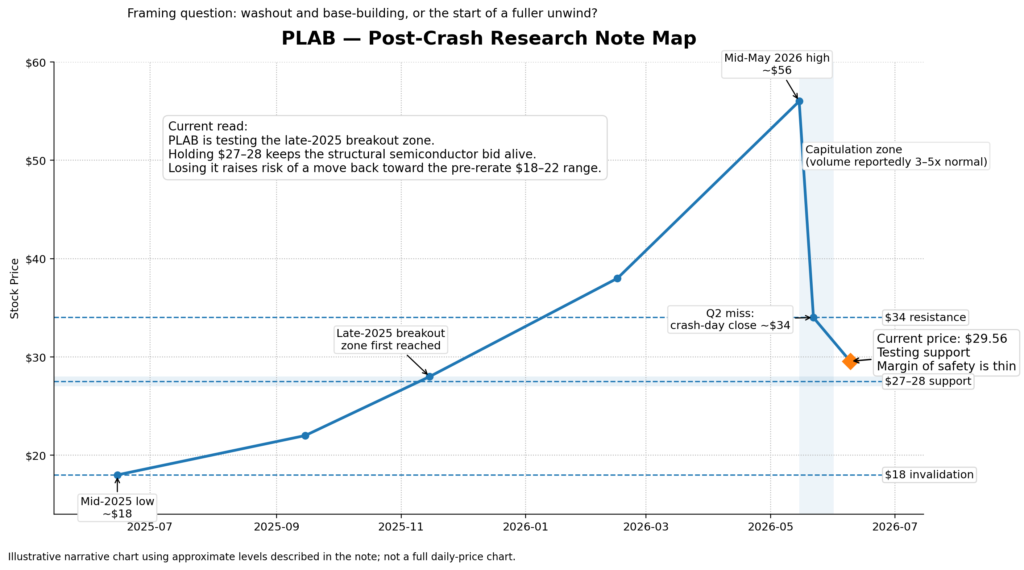
The possible reclassification: mission-critical advanced semiconductor manufacturing infrastructure.
This isn’t a subtle distinction. It changes the comp set, the multiple framework, and the investor base.
Three structural forces are converging on the photomask layer in a way that may permanently change the business profile:
Chip complexity is compounding mask demand. As semiconductor designs move to smaller nodes, the number of photomask layers per chip increases, the precision requirements tighten, and the cost per mask rises. Advanced EUV masks at leading-edge nodes can cost $300,000–$500,000 each. Every generation of AI accelerators, advanced packaging (2.5D, 3D ICs), and heterogeneous integration drives incremental mask demand at higher ASPs. This isn’t cyclical. It’s structural — tied to physics, not capex budgets.
Semiconductor regionalization is creating new geographic demand centers. TSMC Arizona. Intel Ohio. Samsung Taylor. Micron New York. Every new fab being built on U.S. soil under CHIPS Act incentives needs a domestic photomask supply chain. Captive mask shops at foundries handle their own leading-edge production, but the expanding universe of advanced-node designs increasingly pushes overflow volume to merchant suppliers. Photronics is the only U.S.-headquartered merchant option.
Captive-to-merchant outsourcing is a secular trend, not a cyclical one. Running an in-house photomask operation is expensive and operationally complex. As chip complexity rises and the number of design starts proliferates across more customers and more nodes, the economics of maintaining captive mask capacity get worse. Foundries are increasingly outsourcing mainstream and high-end mask production to merchant suppliers — and that trend favors the company with the largest global merchant footprint and the most diversified node capability.
If any two of these three forces sustain, Photronics stops being a cyclical supplier and starts being something closer to Entegris or FormFactor — a specialized, hard-to-replace enabler sitting at a chokepoint in advanced semiconductor manufacturing. The market has not started asking that question.